

Well, my goals for how 2026 would begin, and how much I’d manage to accomplish in its first months, were perhaps as ambitious as 30x30 or the Sustainable Development Goals. That is to say, well-intentioned and aspirational, but also, not practically rooted in the reality of how time or the world works.
(I realize that the above statement might be controversial, and yes, I will elaborate more in a future post!).
Nevertheless, I am hereby reviving Conservation Realist (albeit a month later than hoped). It’s good to be back!
Outlook for Season 3
Based on feedback from my Conservation Sense pilot training on Conservation Mindsets, and on responses of some non-ocean-nerd friends to the book The Oceans and Us (a guide to understanding ocean conservation for non-specialists) (I have a chapter on the Oceans & Human Communities!), I’ve been inspired to slightly adapt Conservation Realist to be more layperson friendly.
I’d originally thought of Conservation Realist as a very niche platform for reaching other conservation professionals, but I realize that there is actually a lot of room for expanding the audience to students and members of the public. A lot of people are interested in conservation and eager to learn more, and I love the idea of using Conservation Realist to - in a small way - help more people gain a more realistic, grounded understanding of conservation.
I’m confident that this can be done in a way that’s still intriguing to conservation specialists, and of course, I’ll still have some nerdy deep dives and in-depth interviews.
I’ll be sharing more tasty tidbits on conservation on Instagram, and I’m aiming for 1-2 podcast episodes per month (available wherever you get your podcasts, though, in the interest of social responsibility, I will say that I’ve deleted Spotify…), which will not necessarily align with the articles I post here on Substack. Full disclosure: I only have a vague idea of how this will all actually emerge into the world. We’ll find out together!
Let’s get re-acquainted
Since it’s been a little while, and since I’ve noticed some recent subscribers (thank you for joining!), here’s a quick refresher on what Conservation Realist is all about:
If you don’t like watching videos, here’s the text version: Conservation Realist started in my mind as “No Bullshit Conservation” (and then, at times, “Grumpy Lady Conservation”). I chose Conservation Realist as the more… versatile… option.
This is my project for sharing insights that I’ve been fortunate enough to experience through my involvement in conservation since 2003 (actually, it might be 2002…), as a student, researcher, practitioner for a large international organization, collaborator to small non-government organizations (NGOs), and a freelance consultant. It’s a career that’s involved: stalking tropical songbirds, army ants, zebras (and lots of zebra poop), monkeys (some poop, too, which is remarkably painful when it’s been dropped upon you from several meters high), dolphins, porpoises, sea turtles, marine otters; lots and lots of interviews and focus group discussions; many training courses and programs to build skills in conservation research and projects; several government meetings and consultations; and endless complicated schematics as I try to map out and evaluate how conservation projects have gone from A to Q to disastrous Z instead of A to B to C as planned.
I left a full-time career in conservation in late 2019 in order to support my nonspeaking autistic brother’s communication access and, now, career as a writer, teacher, and award-winning advocate. But I’m not done with conservation! Conservation Realist - this newsletter and the affiliated podcast and Instagram account - and my training series, Conservation Sense, allow me to share the lessons I’ve had the privilege to learn with, well, all of you! And we get to learn together from my interviews of experts from diverse sectors.
The central idea: Expanding how we think about conservation
Besides the fact that we operate in a dazzlingly, mind-numbingly interconnected world, where hyper-productivity and over-consumption are highly incentivized, I’d say one of the major things holding conservation back is the limited scope of thinking that defines mainstream conservation.
So, much of Conservation Realist is based on the idea of expanding how we think about and do conservation. This includes expanding how we:
Work across sectors, disciplines, and different forms of knowledge
Respect and incorporate diverse lived experiences
Learn from and implement practices that are not based on the dominant Global North’s way of doing things
Envision models for sustained financial support of conservation projects
Question the prevalence of “greatness culture,” whereby disproportionate importance is placed on prestige, fame, and claiming of ideas
Critically, productively evaluate whether we’re actually doing what we hope to be doing, and whether we’re avoiding harm to humans in the process
Appreciate and learn from in-depth local solutions, instead of rushing to “scale up”
I hope you like little-known marine mammals…
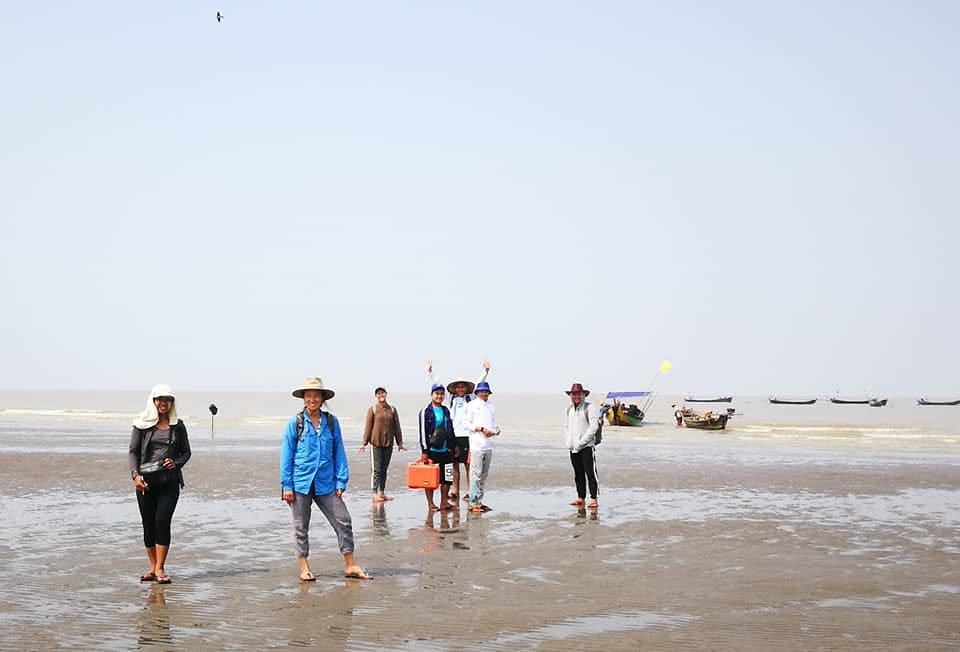
Because that’s where most of my experience is, and that’s the realm in which many of my closest conservation friends work! And, besides the fact that Irrawaddy dolphins and Indo-Pacific finless porpoises are incredibly cute (look up photos if you’re not familiar with them, and you will agree) and warrant attention in and of themselves, there is a lot to be learned from even very specific conservation efforts for a given species at a given site.
And I hope you like human rights…
…because I have an insatiable curiosity for how other sectors - human rights, public health, community organizing - approach big questions of how to work with diverse groups of people (including marginalized, vulnerable populations) to develop and implement solutions to tricky problems. So interviews will feature conversations with such experts, in addition to experts with a more traditional conservation background.
And many of my posts will dig into why such topics are critically important to conservation, and the complex dynamics that emerge when “I love dolphins and want to protect them!,” neo-colonial approaches to “protecting” resources, issues of communication and conflict, and complex systems collide.
And I hope you like doodles!
As aforementioned, I’ve spent a lot of my conservation career doodling out schematics of how different parts of a given conservation situation might be linked. It’s turned out to be a valuable tool for helping me better grasp potential and actual pathways in conservation, and it’s probably the most popular skill I’ve shared with students and mentees over the years. I’ll make heavy use of boxes, circles, and arrows, and I think you’ll actually find it pretty instructive!
Let me know what you think!
I’d love to hear from you! Please let me know what you’d like to see me cover, and how, and also, your opinion on exactly how cute Irrawaddy dolphins are.