


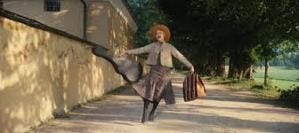
...and suddenly, I have that "I Have Confidence" song from The Sound of Music film stuck in my head.
Continuing with the Conservation Sense series on conservation mindsets - a preview of more in-depth trainings that I offer (I will be in touch to follow up on the free pilot training this week - let me know if you're interested and haven't yet reached out!). I feel like we're due to feature a more positive mindset, so, here you go: confidence!
Now, I do not mean complacent arrogance that, unfortunately, is common in conservation (as with any other field). I mean confidence grounded in mindful reflection, well-earned skills, open-minded experience, and a continuous learning mindset. I mean the belief or conviction that you can do certain things, that you can learn to do more things, and that in doing these things, you can have an impact.
Confidence does not mean lack of humility, and it does not mean a sense of superiority. And it doesn't mean that difficult things won't feel difficult, or that everything you try will succeed. But it's the assurance that you can keep trying and learning, and that you will see results over time. It's an openness to the possibility that you can make things happen.
I do mainly focus on how monumental it can be to support stakeholders, particularly from marginalized groups, in realizing their own confidence. It's a "multiplier" mindset, in that it opens up a vast realm of possibility: it amplifies what someone feels capable of, across multiple arenas of their life. It's an essential part of my approach of "teaching people how to learn" instead of just teaching people specific, isolated skill sets.
Now, in terms of our own confidence, say, as researchers or practitioners: this, too, is important. A confident conservation professional is more likely to be open to collaboration and co-creation, instead of clinging to bias or a superiority complex. They are more open and creative in figuring things out in the complex mess that conservation often is. They can better advocate for their projects, their communities, and their organizations.
Confidence is often grouped under a term that I really don't like, which is "soft skills." Soft skills are just generally not taken as seriously as "hard skills," which is ridiculous, because so-called soft skills are so sweeping and broad in terms of how important they are. Those hard skills won't be nearly as effective without soft skills in applying them. I'd love to call them "keystone skills" or "amplifying skills" or something with a bit more pizazz. So, confidence and similar "soft" skills and mindsets are often not taken all that seriously, if considered at all, in professional development, community engagement, and "capacity building" (yes, I don't love that term, but it's convenient for now) programs.
Here are some quick examples of how I've learned to really appreciate confidence in conservation:
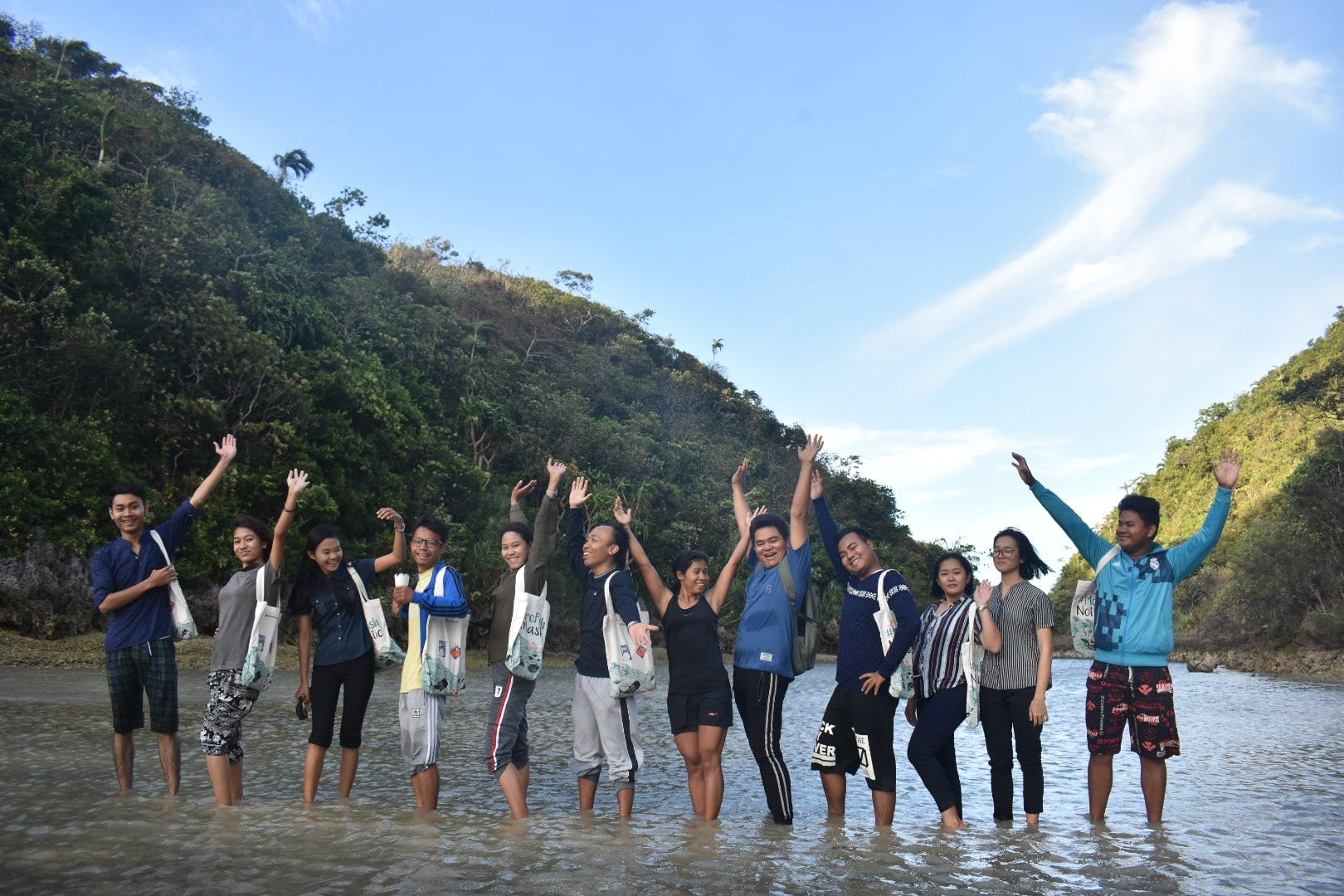
From the training program I developed with Myanmar Coastal Conservation Lab (MCCL) for the Gulf of Mottama Project, training students and recent graduates to build skills in conservation and research: in the post-program evaluation, several of our alumni *wrote in* confidence as something that they gained from our training. I hadn't even thought to include it as one of the skills to evaluate progress on, but they felt that it was significant enough to write in under the "other" category. And I saw this confidence rise among the MCCL staff, interns, and the program students as they grew into their roles. This continues with the community youths that MCCL trains to be conservation focal points in local villages - the positive and amplifying impacts of their confidence is a common point expressed by these youths.
From participatory evaluation of the Gulf of Mottama Project's impacts in selected villages: confidence was, again, a dominant theme through people's responses, across different domains and in response to different questions. "I feel more confident to work for the community," "I feel more confident in collaborating and communicating with others," "I feel more confident in representing our community to the government," "I feel more confident in managing my income," etc. The confidence opened them up to a world of greater possibility; it strengthened their sense of agency, empowering them to try new things to support their livelihoods, help their communities, and manage their natural resources. I believe that a big part of this was the fact that this project was (a) long-term and able to support local institutions (village committees and various subgroups) for coordination and sharing of knowledge and skills, and (b) invested in supporting not just dissemination of knowledge and skills, but supporting the practice and application of those knowledge and skills.
From the coast of Trat Province, Thailand, where there was a network of fishing villages that had established their own crab banks (essentially, if a gravid female - with eggs - was captured, she'd be kept in a sort of aquaculture-like set-up until she released her eggs, which could then support the population of the stock, and then sold). This was started by a knowledgeable local who had gotten a degree in fisheries science, returned home, and spread the idea to his neighboring villages. The Department for Marine and Coastal Resources provided technical support, and the crab banks were successful. This built the confidence in these communities in the possibility of having a positive impact on natural resources and in the power of collaborative, cooperative efforts, which in turn has translated to interest in other conservation efforts, such as conservation of local coastal cetaceans.
In building confidence, we want to incorporate elements of: (1) I can learn and grow (growth mindset), (2) I have the knowledge and skills to do things (agency or, commonly in the confidence literature, self-efficacy), and (3) I can assess and recognize the power and limitations of my knowledge and skills (mindfulness and critical thinking).
These can be supported through small, achievable steps, even just in a classroom or training setting, though ideally also including some sort of immersion in an applied setting. That is why I staunchly advocated for funding to send our young MCCL researchers and interns on learning exchange trips, and I was right - those trips proved so formative in their confidence to create their own initiatives and innovations in a way that has been sustained over the years. But immersion doesn't need to be a formal trip with a substantial budget; it can be done pretty much anywhere, with some creativity and flexibility.
It's important to note that knowledge and skills are a necessary foundation for confidence; all of the self-affirmations in the world won't get you very far if you don't have those. But gaining knowledge and skills won't automatically result in confidence for everyone. Practice and application of knowledge and skills - building someone's experience in applying and adapting their knowledge and skills - is an important part of the process.
In my experience, building confidence is often not an explicit part of many projects' community engagement and capacity building plans. And I've sat in on tedious technical trainings that teach specific skills without supporting participants in building confidence to apply those skills. A common challenge for capacity building programs is that the trainees often emerge without a solid base of confidence for applying or sharing what they've learned. So, effective capacity building must focus on the question of: how do we support our participants in building confidence, in addition to delivering specific types of knowledge and skills trainings?
Promoting confidence in the ability to learn and the ability to effect change is vital to the sustained positive impacts of any capacity building program. This will support prolonged conservation efforts that will need to continue after specific, externally-run programs or projects are no longer funded and that will rely heavily on locally-run initiatives. There's a lot more that I go into in the full trainings, with more examples from the field, but I think this is enough of a taste for now.
What are some of your experiences and observations around the impact of confidence (or the lack thereof) in conservation? I'd love to hear them!
Thank you again for joining me! As a reminder, please do like, comment, share, and subscribe, and let me know what you think.


